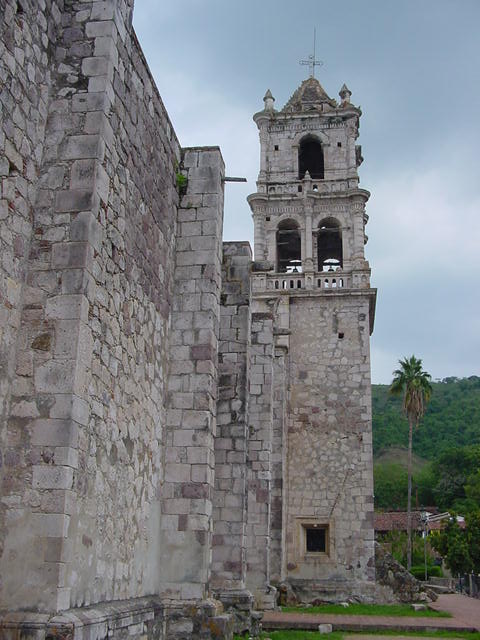
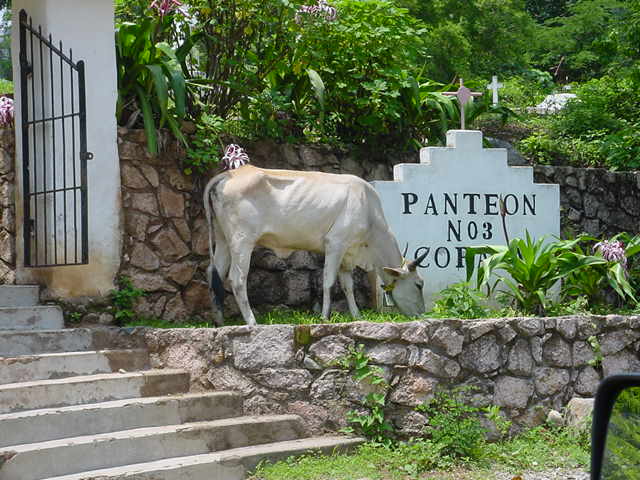
We made a little side trip this week; hit the highway towards the Sierra Madres and an hour later we landed in Copala. It is a little mining village tucked deeply into the mountains. Meandering cobblestone streets take you past red tile roof houses and lead you to the town square. There is a bandstand in the middle of the square and it is dominated by the beautiful San Jose Church. There are three resturants in town and also a shop on the square that sells all sorts of arts and crafts. We went without a guide, so I have pieced together what history I could from our visit and what I could find on the internet.
Local Indians worked these mineral-laden grounds to pay religious tributes to priests from their Lake Texcoco capital, Tenochtitlan. First it was the Mayans, then it was the Aztecs. The town itself was founded in 1565 by conquistador, Fransisco Ibarra, in the hopes that he would find the legendary "Copala Lagoon", a large gold vein. He died there 10 years later at the age of 36. In time, Catholicism entwined with the native religion and lifestyles . Iglesia San Jose was constructed between 1748 and 1775. It is considered one of the oldest and most beautiful village churches in Mexico, and one of the few remaining examples of baroque style architecture. The mines were closed in later years , but have been since reopened. The resturants there, Daniels, Copala Butter Co., and Chalvas are all very good. The town is also known for it's delicious banana coconut creme pies. It is worth the drive just for that! A little side note, inside of Daniels Resturant, for 5 pesos you can actually tour the mines. There are lots of interesting photographs in there as well, AND the scissors that cut the umblilical cord of Pancho Villa, himself!
...."In the little mining town of Copala, Sinaloa, in a chamber in one of the old mines, a number of antique tools were found...The type is quite different to any now in use... That the tools were of Spanish origin may be supposed, but the Spaniards could hardly have commenced mining in remote western districts immediately on their occupation of the country from the Gulf side, nor for many years afterwards, if they did so at all. The chamber had evidently been filled with water at some time, and had dried out, as the encrustation on the tools indicated a long period of submersion. And again the implements may prove the Asian origin of the west coast population, and the importation of their arts from the Transpacific continent, in which case the instruments may possibly come from China or Japan, or the Malayan Archipelago, like so many of the customs and tribal languages of the Western Mexican Indians." - Hans von Michaelis